Our co-chair MEP Maria Grapini, opened the morning’s discussion by stressing that sustainable livestock and its by-products represent an important topic that is sometimes less understood by the general public. MEP Grapini called for the integration of animal by-products into the bioeconomy, underlining that Europe must support its rurality as the backbone of a sustainable and resilient economy. She emphasised that bio-based materials must be biodegradable and reusable by design, and that the environmental impact of these products must be correctly and fairly calculated — a theme that would resonate throughout the entire meeting.
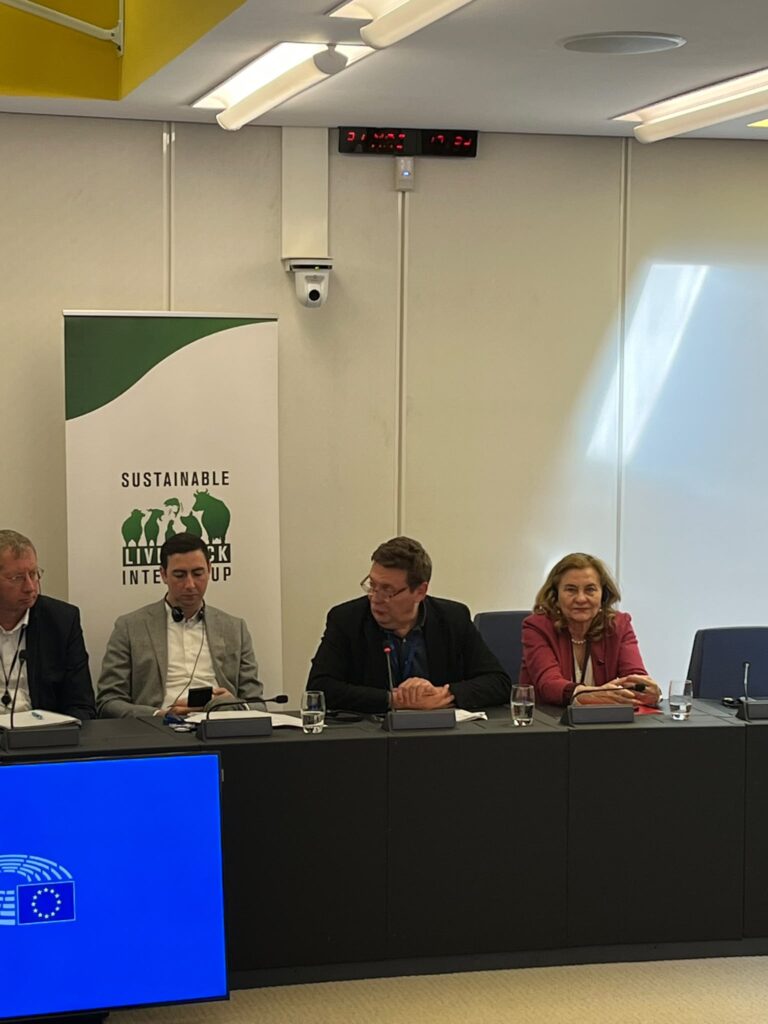
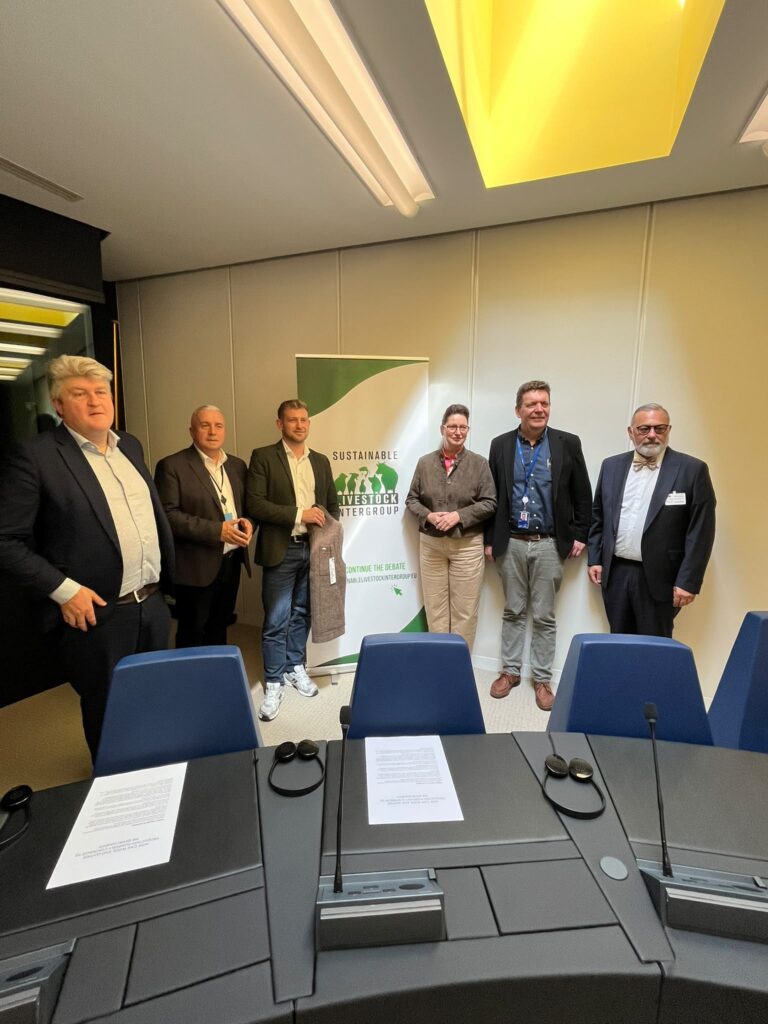
MEP Alexander Bernhuber, quickly took the time to welcome everyone in this intergroup session on wool and leather and warmly welcoming the participation of his fellow countryman from Austria.
Before the first speaker took the floor, the Intergroup screened a short video produced by the International Wool Textile Organisation (IWTO) on the environmental potential of wool. The film presented a striking finding: once biogenic carbon is properly incorporated into emissions calculations, wool production can achieve reductions of up to 105% compared to cotton. This set up the following question: how can wool currently be rated as 11 to 33 times worse for the planet than fossil-based synthetic fibres such as acrylic, nylon and polyester?
Dr Paul Swan joining from Sydney, Australia, provided a rigorous scientific answer. He explained that current life cycle assessment (LCA) frameworks suffer from a fundamental paradigm problem: they apply decades-old carbon accounting tools designed for carbon trading and national inventories, not for evaluating bio-based systems. These tools count emissions only and exclude biogenic carbon flows — the carbon stored in manure, respiration, urine and the wool product itself is either ignored or penalised.
When biogenic carbon cycling is properly accounted for under ISO 14067, the picture changes dramatically. Accounting for carbon retained in sheep respiration, urine and mortalities alone reduces the emission intensity of wool by around 40%. Allowing a proportion of manure pellets to remain in the soil brings a further 32% reduction, and under regenerative grazing practices farms can become a net carbon sink. Each kilogram of raw wool also carries approximately 1.7 kg of biogenic carbon dioxide equivalents — a value currently invisible in standard LCA accounting. Dr Swan concluded that the EU’s Product Environmental Footprint (PEF) methodology risks becoming a form of regulated greenwashing, unfairly disadvantaging natural fibres over fossil-based alternatives. He called on policy makers to urgently develop the bioaccounting profession and balance environmental scorecards by recognising ecological services alongside damage.
Roland Taferner, an Austrian sheep farmer and representative of the Austrian Sheep and Goat Association, brought the discussion to farm level. He began with a simple truth: wool shearing is a health necessity for sheep, not an optional economic activity — farmers must shear at least once, and often twice, a year regardless of market conditions. Yet the market has failed wool farmers comprehensively.
Roland described wool as fully renewable and biodegradable, with enormous, untapped potential that goes unrealised because policy and market structures have failed to focus on its benefits. He cited the situation in Spain, where farmers receive less than 50 cents per kilogram of raw wool, while shearing costs range from two to five euros. The economics are broken. Much of Europe’s raw wool is shipped to China for processing and returned as cheap finished goods, undermining European processors and farmers alike.
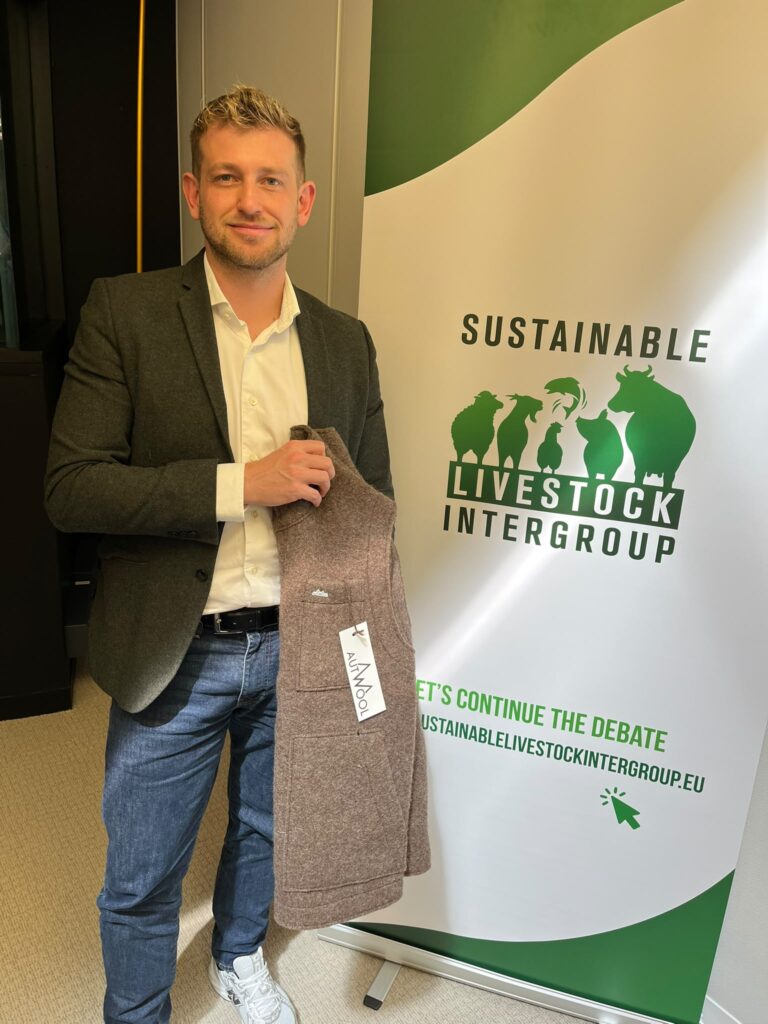
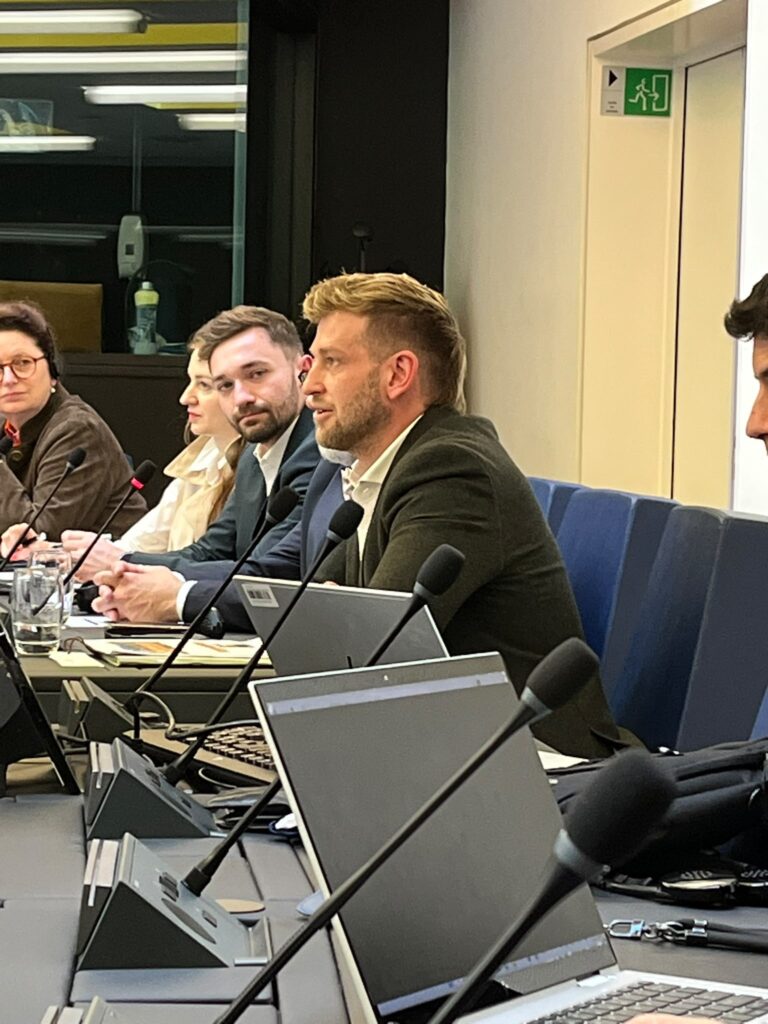
He highlighted two particularly promising applications: wool as a sustainable insulation material for buildings, and wool as a soil fertiliser. On fertiliser use, he identified a significant regulatory barrier: raw wool is currently classified under Category 3 of the Animal By-Products Regulation (EC 1069/2009), in the same risk category as blood and other higher-risk materials. This prevents wool from being applied directly to soil without prior treatment — an obligation that makes little agronomic sense when the material is simply returning to the earth. He called for reclassification and a change in mindset: “Wool is not a cost — it is an opportunity.”
MEP Christine Singer welcomed Roland’s presentation warmly, highlighting the fertiliser application of wool and noting that the timing — with Parliament that same week debating the Fertiliser Action Plan — could not have been more apt. She underlined the importance of finding a legislative route out of the current waste framework classification.
MEP Daniel Buda struck a more emotional note. He recalled that a generation ago in Romania, a farmer with a flock of 300 sheep could buy a house from the value of their wool — a stark measure of how far the sector has fallen. He pointed to the South African wool exchange model as a practical example that Europe should explore, and posed a direct challenge: “We like to talk about the circular economy here in Parliament — but do we actually do anything to bring it about?” He strongly supported reclassifying wool out of the high-risk animal by-product category, observing bluntly that “wool is not the same as blood.”
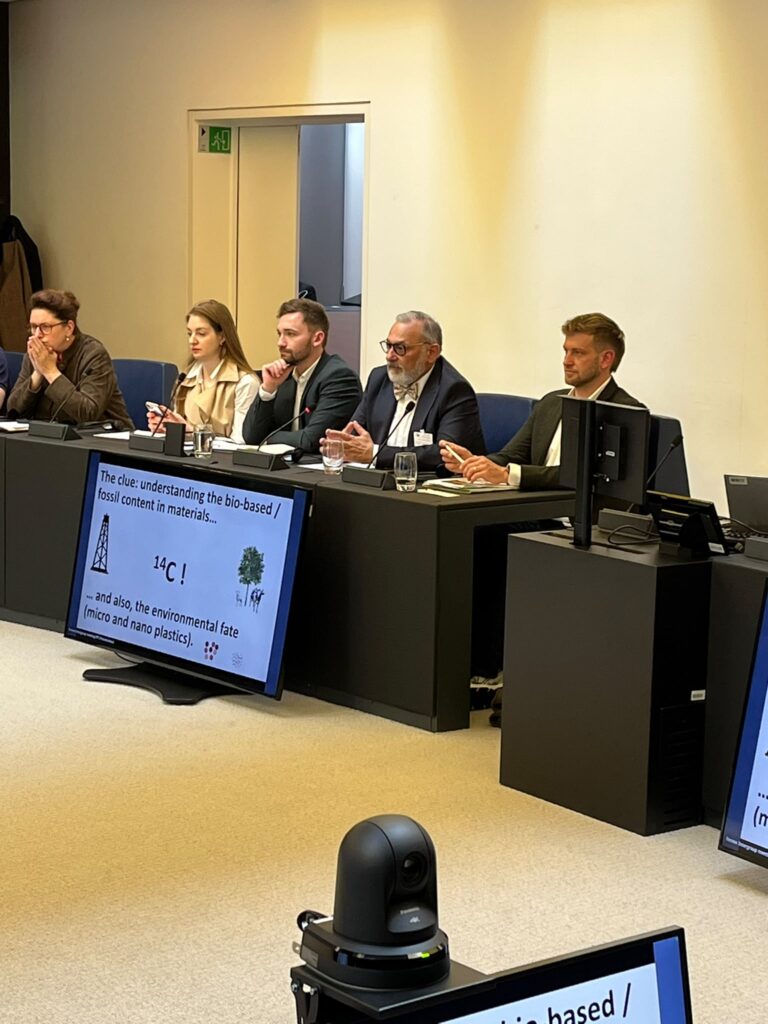
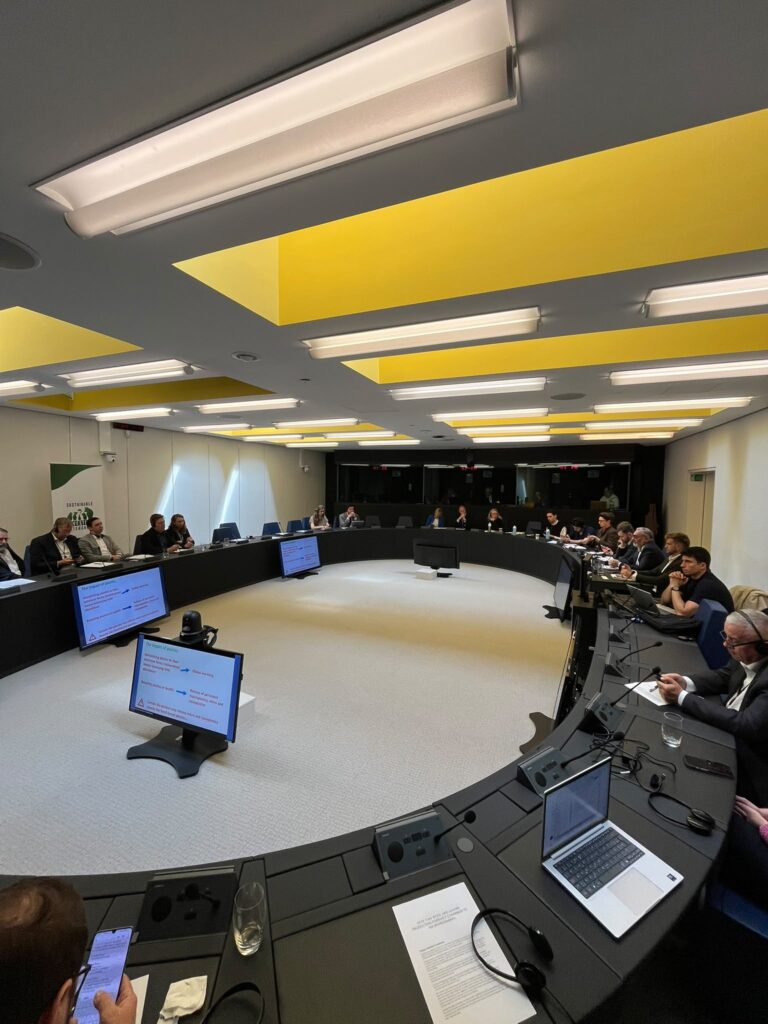
Gustavo Defeo, a specialist researcher in carbon analysis and the founder of Ars Trinctoria, a laboratory specialised in organic analytical research, presented leather as a case study in accurately measuring the environmental impact of natural materials. His team uses C14 radiocarbon analysis to determine the genuine bio-based content of materials on the market — a powerful tool to detect greenwashing. Testing commercially available “vegan” and “plant-based” leather alternatives revealed that several products contained as little as 26–28% natural content, with the remainder being petrol-derived polyurethane. By contrast, traditional Italian vegetable-tanned leather was found to contain 96% biomass content. He argued that truly sustainable materials must be durable, reusable, repairable, and renewable, and that their full environmental fate must be rigorously disclosed.
Michael Losch, Coordinator for Bioeconomy at DG Agriculture and Rural Development, joined by video call from Brussels. He noted — to warm appreciation from the room — that he is himself a small sheep farmer in Austria, heading home the following week for his own shearing. The Agriculture Committee had that very week launched a study on the bioeconomy, which he described as strongly aligned with the Commission’s new Bioeconomy Strategy.
He identified three key structural issues for the European wool value chain, all of which had emerged during the meeting:
Concluding the meeting, our co-chair MEP Cassart drew the threads of the morning together. He reflected that the issues discussed — from fertiliser prices to microplastics to false environmental labelling — are all interconnected, and that the consistent message from this Intergroup remains that animal husbandry is part of the solution, not the problem. The presence of a Commission official committed to this agenda — and who tends his own flock at weekends — was a note of genuine optimism.
MEP Michael McNamara closed with a timely reminder that wool has served as a building insulation material since the Middle Ages, and that European buildings could benefit today from replacing polluting synthetic insulation with this biodegradable, naturally high-performing alternative.
Thank you to MEP Daniel Buda, MEP Christine Singer, MEP Céline Imart, MEP Nina Carberry, MEP Valérie Desloges and MEP Michael McNamara for their attendance, interventions and contributions.
Download here the Call to Action signed by our co-chairs and addressed to the Commission
Our next meeting will take place on 24 June in Brussels. We look forward to seeing you there.
The Common Agricultural Policy (CAP) must remain a central framework to support European agriculture and the conditions to enable farmers
How do the requirements of the EU Deforestation Regulation (EUDR) impact the competitiveness of the EU livestock sector? The EUDR
Momentum for progressive investment in more sustainable farming systems has slowed down or even stopped due to over restrictive and burdensome