Our co-chair MEP Benoit Cassart opened the Intergroup meeting in Strasbourg by welcoming participants in the room and online, stressing that it was a very positive day for the livestock sector, with Parliament voting at noon on the initiative report on a sustainable livestock sector.
He highlighted that the report gives a strong mandate for future work, acknowledging both the challenges livestock farming faces and the need for practical, science‑based solutions. “This is not the end point,” he said, “but a starting point.”
MEP Alexander Bernhuber our co-chair underlined that feed is key when it comes to reducing emissions from monogastric livestock farming. He reminded participants that while pressure on the sector is growing, food production is essential. “We all need something to eat,” he said, adding that innovation in feed is one of the most promising ways to reduce environmental impact while safeguarding food security.
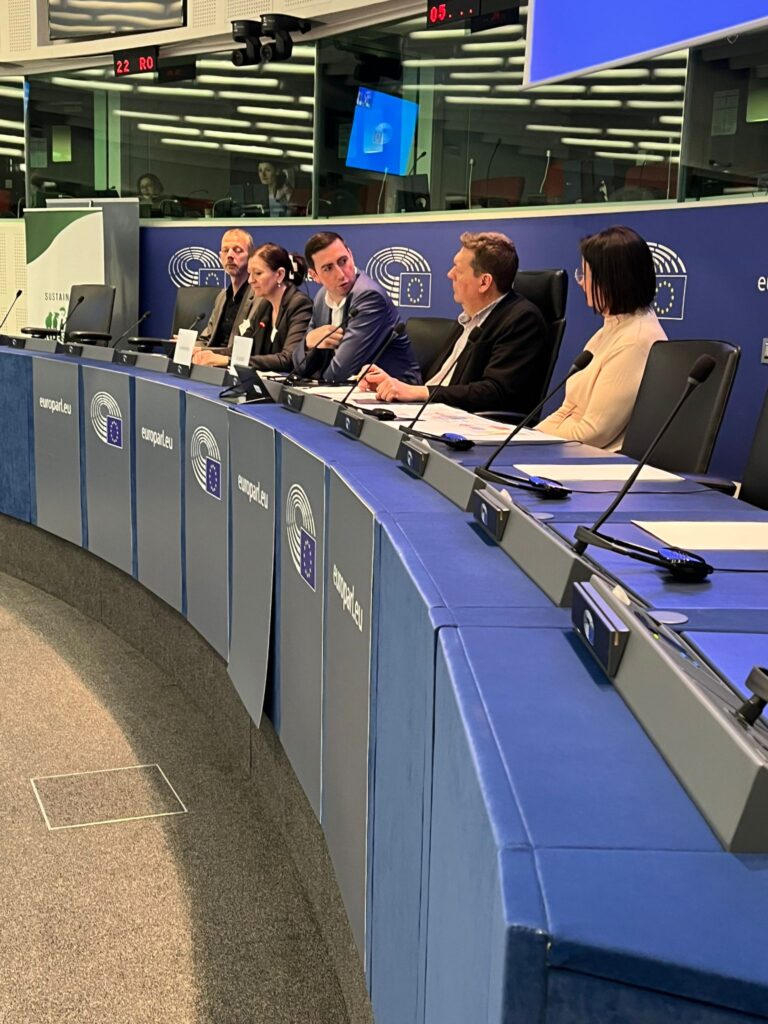
Setting the scene, MEP Cassart underlined that for pork and poultry, the main source of emissions is feed, particularly the production, processing and transport of feed ingredients. He called circular feed “a sea change”, moving from a linear to a circular system where by‑products and former foodstuffs are fully utilised. He also stressed the need to update EU feed additive legislation, which no longer reflects today’s innovation.
Christine Parry, Vice Chair of the Global Feed LCA Institute (GFLI), explained why high‑quality, harmonised environmental data is essential for the feed sector. She showed that feed can account for up to 75–88% of the carbon footprint in monogastric systems. “Data is incredibly powerful,” she said, enabling better sourcing decisions, lower‑carbon feed formulation, and transparency throughout the supply chain. She also highlighted that EU livestock production is among the most efficient globally and warned against offshoring production, which would increase global emissions.
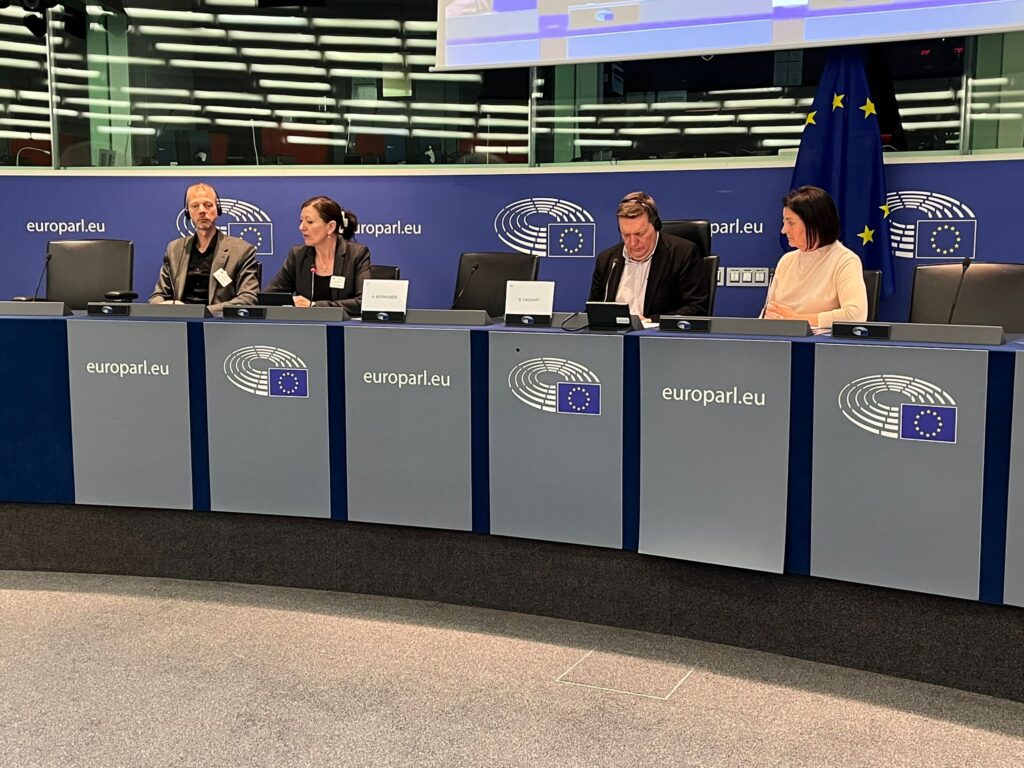
Representing the European Commission and the Directorate General for Agriculture, Brigitte Misonne emphasised that livestock must be seen as multifunctional systems, providing food, jobs, cultural value, biodiversity and circularity. She stressed that decarbonisation must work with farmers, not against them. “Solutions already exist,” she said, citing feeding strategies, feed additives, herd management, genetics and biogas. The upcoming EU livestock strategy, she explained, should focus on scaling up these solutions while maintaining competitiveness.
Professor Jan Værum Nørgaard from Aarhus University showed how feed efficiency and feed additives have already driven major reductions in nitrogen, phosphorus and carbon emissions in pig production. He explained that circular feedstuffs often require additives like amino acids and enzymes to maintain animal performance and reduce nutrient losses. “Feed additives are not optional,” he concluded, “they are mandatory if Europe wants efficient, low‑emission livestock production.”
Sigrid Pauwelyn from the European Former Foodstuffs Processors Association (EFFPA) presented circular feed in practice, showing how former foodstuffs such as bread, biscuits and snacks are transformed at industrial scale into safe, high‑energy feed ingredients. She explained that these products can replace imported raw materials and significantly lower the carbon footprint of feed, while contributing to EU food‑waste reduction targets.
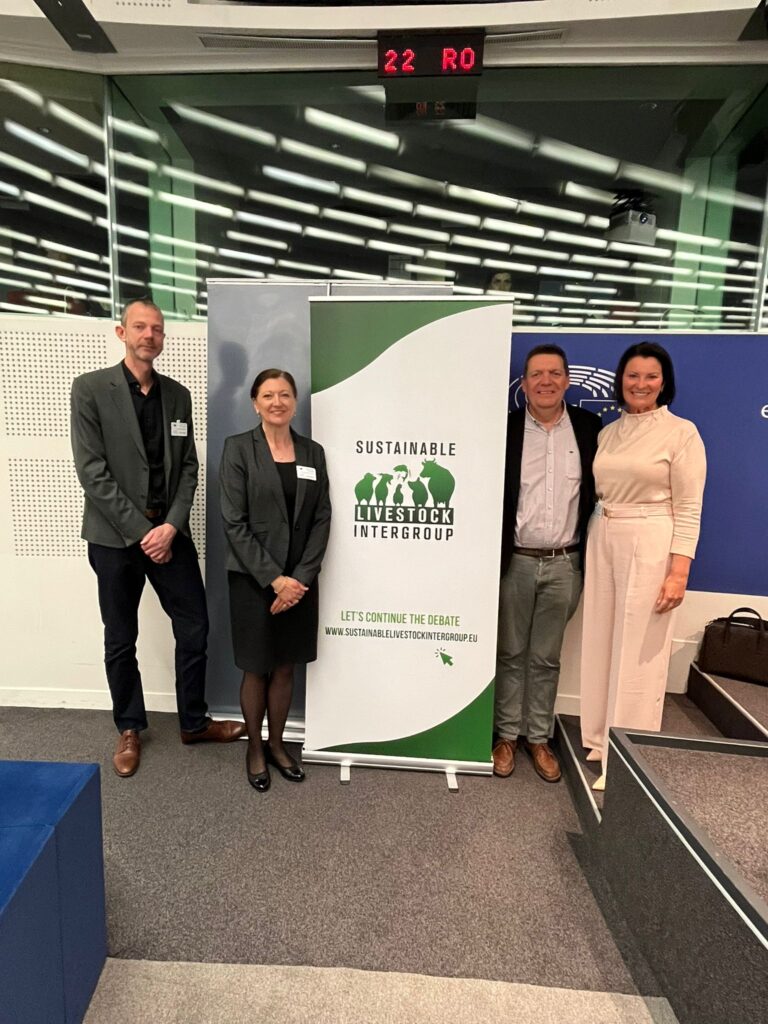
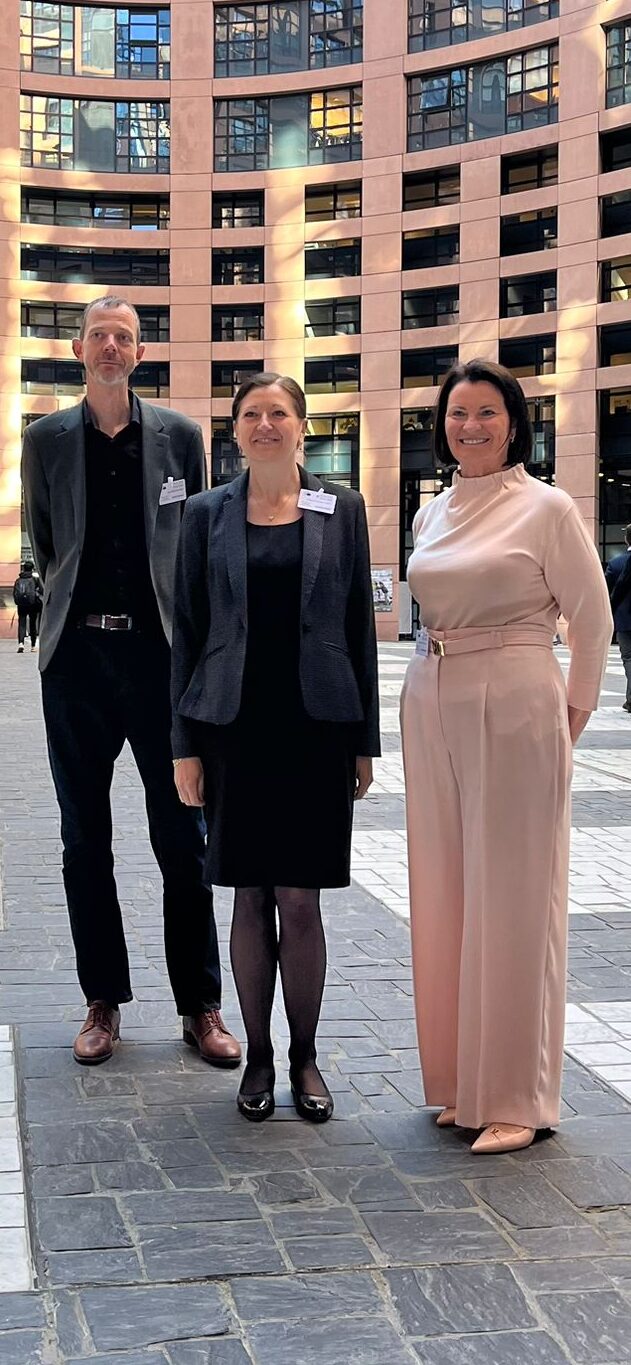
Throughout the exchanges between speakers and participants present, a clear consensus emerged that innovation in feed and nutrition already delivers tangible emission reductions in monogastric livestock systems. Examples from academia, industry and the circular feed sector showed that science‑based solutions are available, scalable, and increasingly necessary to meet EU climate objectives. However, turning innovation into impact depends on whether these solutions can actually reach farmers. Several speakers therefore shifted the discussion from what works to whether Europe enables its uptake. This set the stage for a broader reflection on the policy and regulatory framework governing feed innovation.
The discussions highlighted concerns about regulatory barriers, particularly the lengthy and costly approval process for feed additives, which often pushes innovation outside Europe. Industry representatives stressed that this undermines EU competitiveness and delays access to solutions that could reduce emissions today.
Closing the discussion, MEP Cassart underlined the strong consensus in the room: science, innovation and common sense must guide EU policy. Simplifying regulation, supporting farmers, and enabling circular solutions will be crucial if Europe is serious about reducing emissions while keeping livestock farming viable.
As our co-chair concluded, “Sustainability is not about ideology – it’s about facts, data and solutions that work on the ground.”
Thank you to MEP Marko VEŠLIGAJ and MEP Jérémy DECERLE for their questions and exchange with the speakers
MEP Céline IMART was also represented by her APA
The Common Agricultural Policy (CAP) must remain a central framework to support European agriculture and the conditions to enable farmers
How do the requirements of the EU Deforestation Regulation (EUDR) impact the competitiveness of the EU livestock sector? The EUDR
Momentum for progressive investment in more sustainable farming systems has slowed down or even stopped due to over restrictive and burdensome