With transboundary and emerging animal diseases increasing in occurrence in Europe the Intergroup looked at whether the main practices governing the management of animal disease outbreaks (biosecurity, vaccination, culling) in the EU are still aligned with the latest scientific knowledge and practical capabilities
Intergroup chair MEP Benoit Cassart opened the meeting with the reflection that there are too many differences in disease control measures between the member states. Before handing over to the speakers, he said there is a clear need for a harmonised approach, with improved biosecurity, disease surveillance, and preventive measures.
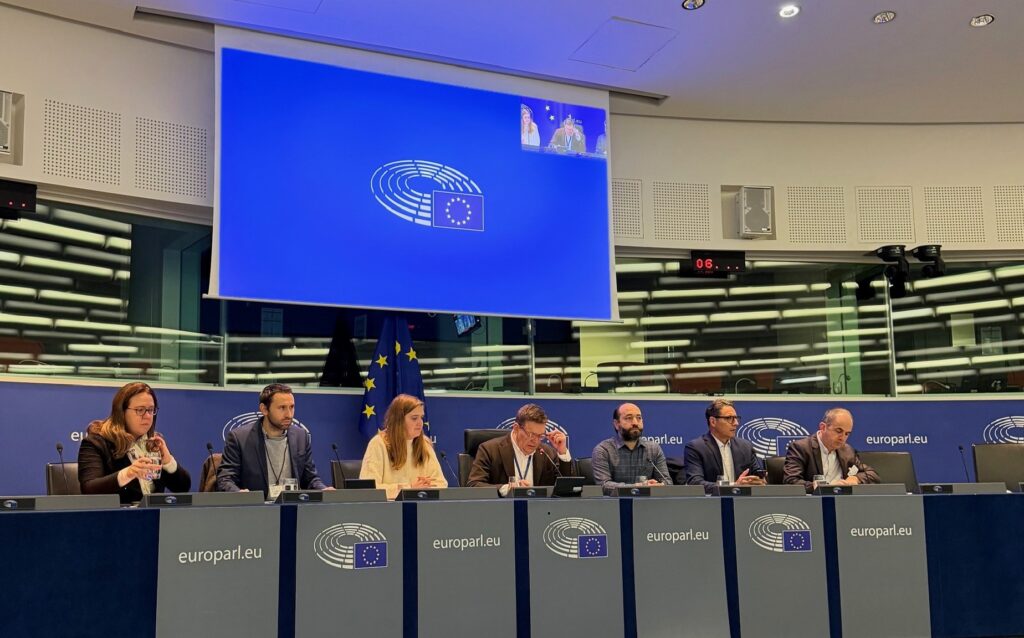
Speakers from academia shared their views on the existing control measures in Europe:
Ilias Chantziaras from Gent University focused on Biosecurity, highlighting its importance but recognising that biosecurity is not the sole solution. He explained the BioCheck scoring system which offers a risk-based and scientific way to evaluate on-farm biosecurity. He concluded that with different EU countries having different measures in place, there is a need to establish a harmonised framework with a risk-based approach.
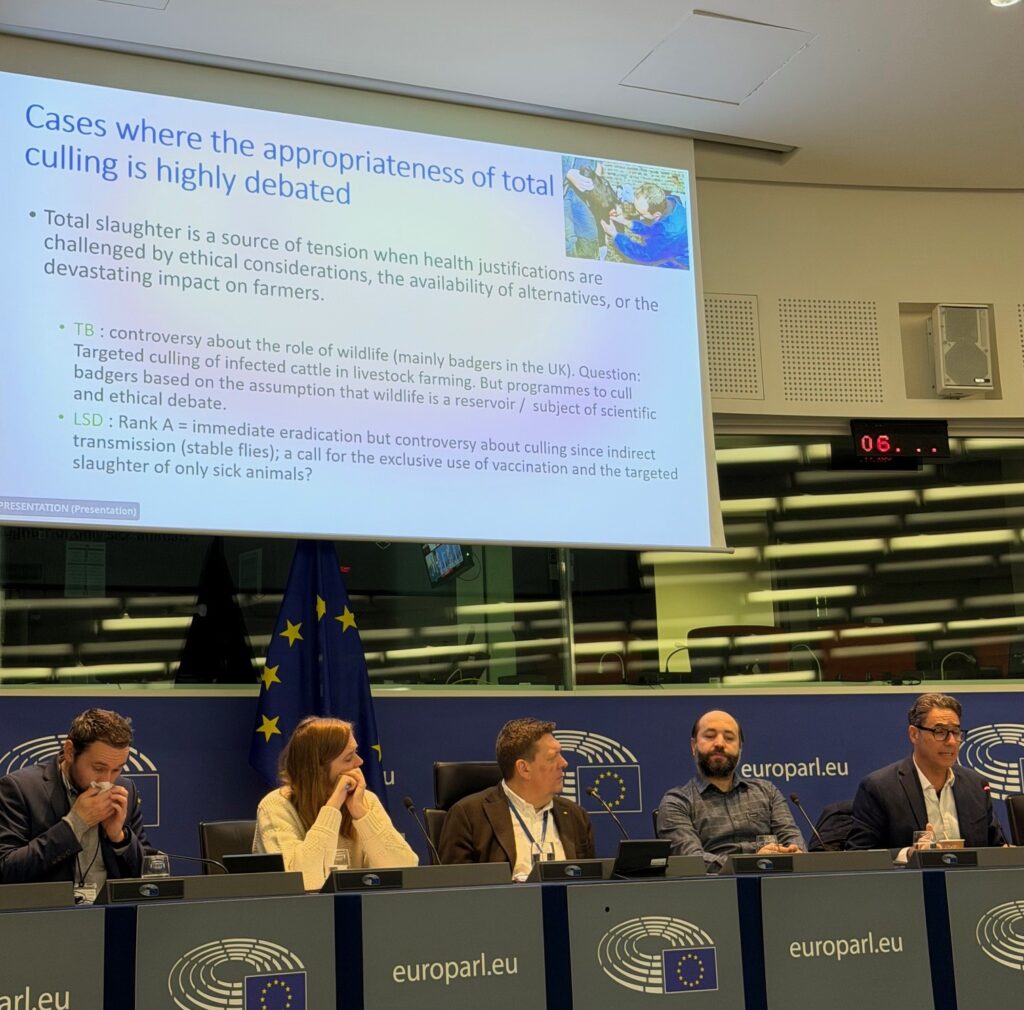
Eric Cardinale from ANSES addressed the question of culling as a control measure and the ethical debates surrounding such practices. He highlighted the main reasons for culling, confirming that sometimes culling is the only measure imposed by the authorities, but in some cases it may be due to a lack of alternative prevention measures. It’s all a question of balance.
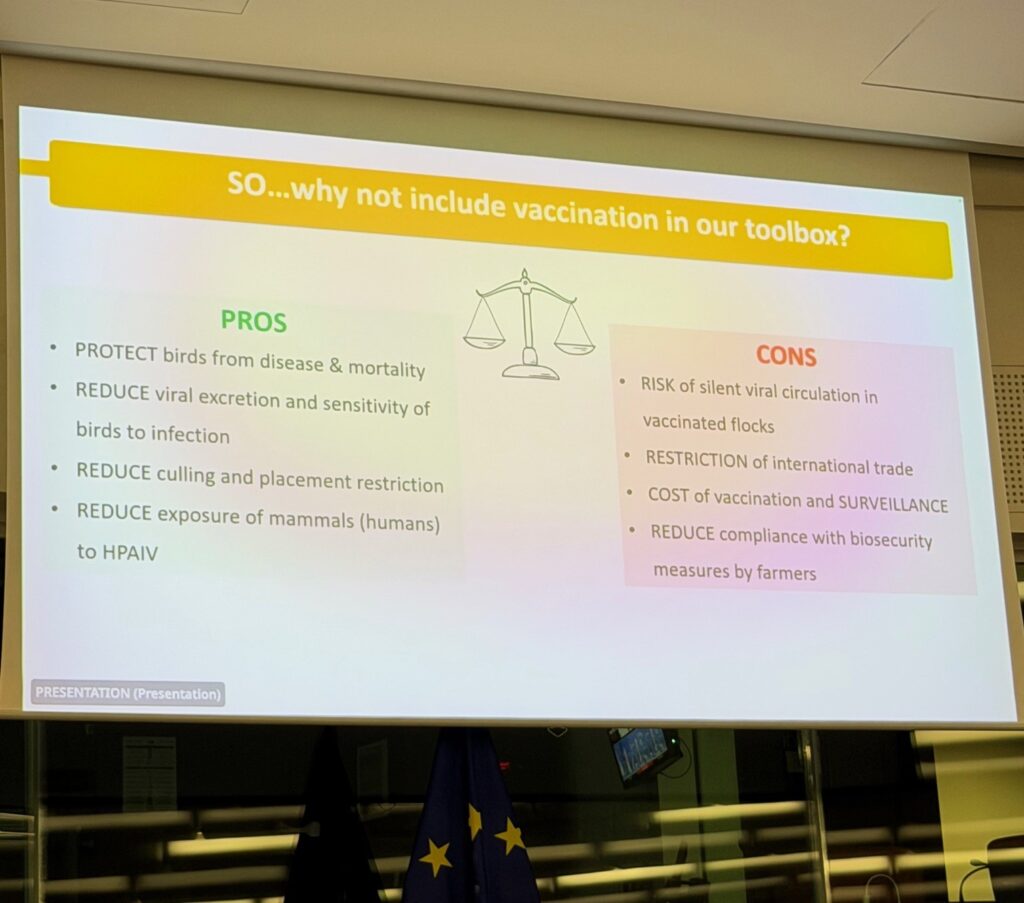
Jean-Luc from INRAe and the Toulouse Vet School (ENVT) used the example of Highly Pathogenic Avian Influenza to speak about vaccination. Weighing up the pros and cons he concluded that major advances in vaccine and diagnostics technologies should be able to overcome current trade barriers. There is a clear need to remove the taboo around vaccination as a disease control measure.
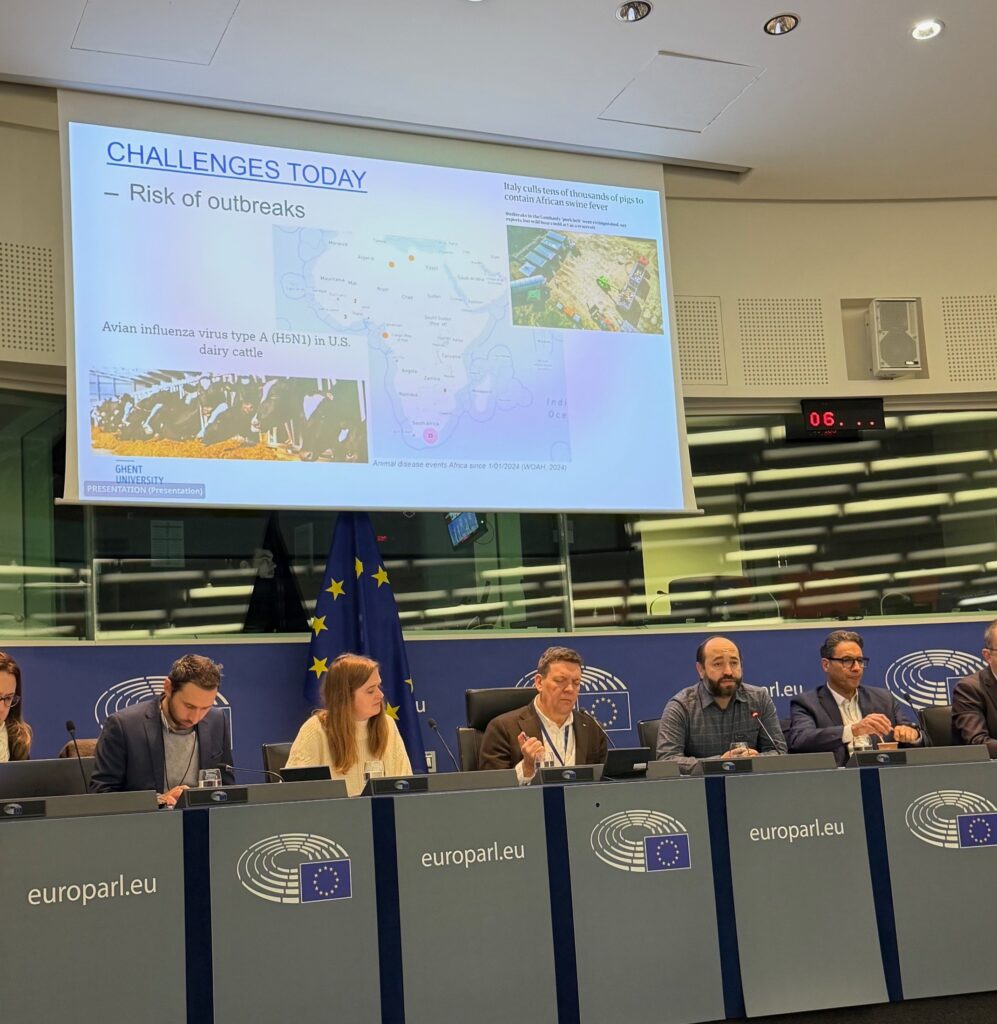
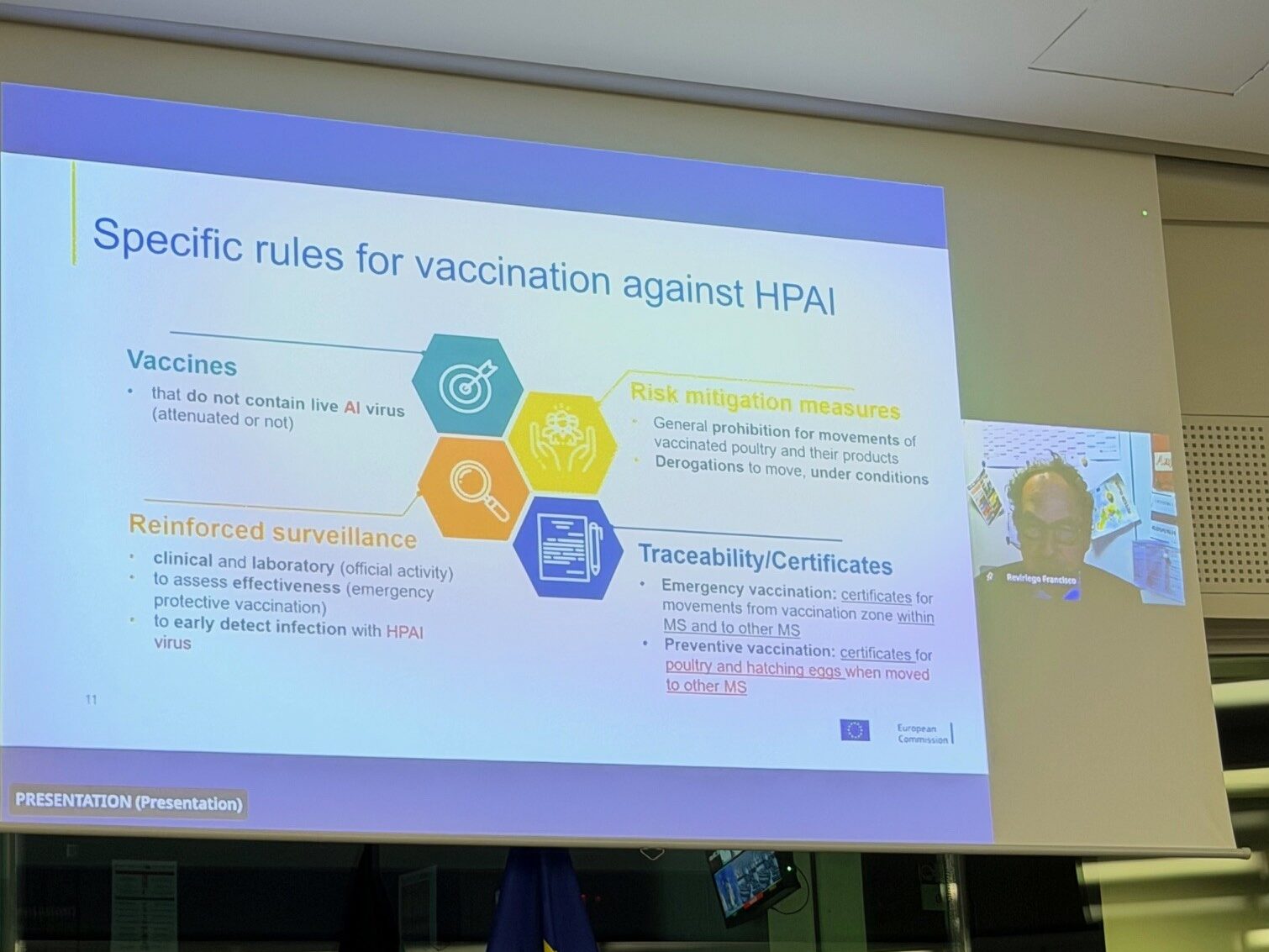
Moving on to the authorities and standards point of view, Francisco Reviriego from DG SANTE talked first about the EU’s approach to animal disease management. He highlighted current regionalisation measures which are accompanied by tracing, surveillance and testing. He pointed out that in some cases emergency vaccination is possible, but there are only vaccine banks for some Category A diseases.
Montserrat Arroyo from WOAH talked about the WOAH standards highlighting that they are based on risk, science, evidence, and they evolve in line with new recommendations, advances in technology, etc. She welcomed the exchange in the Intergroup, saying that dialogue like this is essential as WOAH aims to future-proof its standards.
The Belgian Walloon region Agriculture Minister Anne-Catherine Dalcq also welcomed the discussion and talked about the need to ensure farmers are prepared for the new reality of constantly evolving diseases. She posed a key question as to why the farmer has to bear all the disease prevention costs alone, when there is a whole chain behind the production of food.
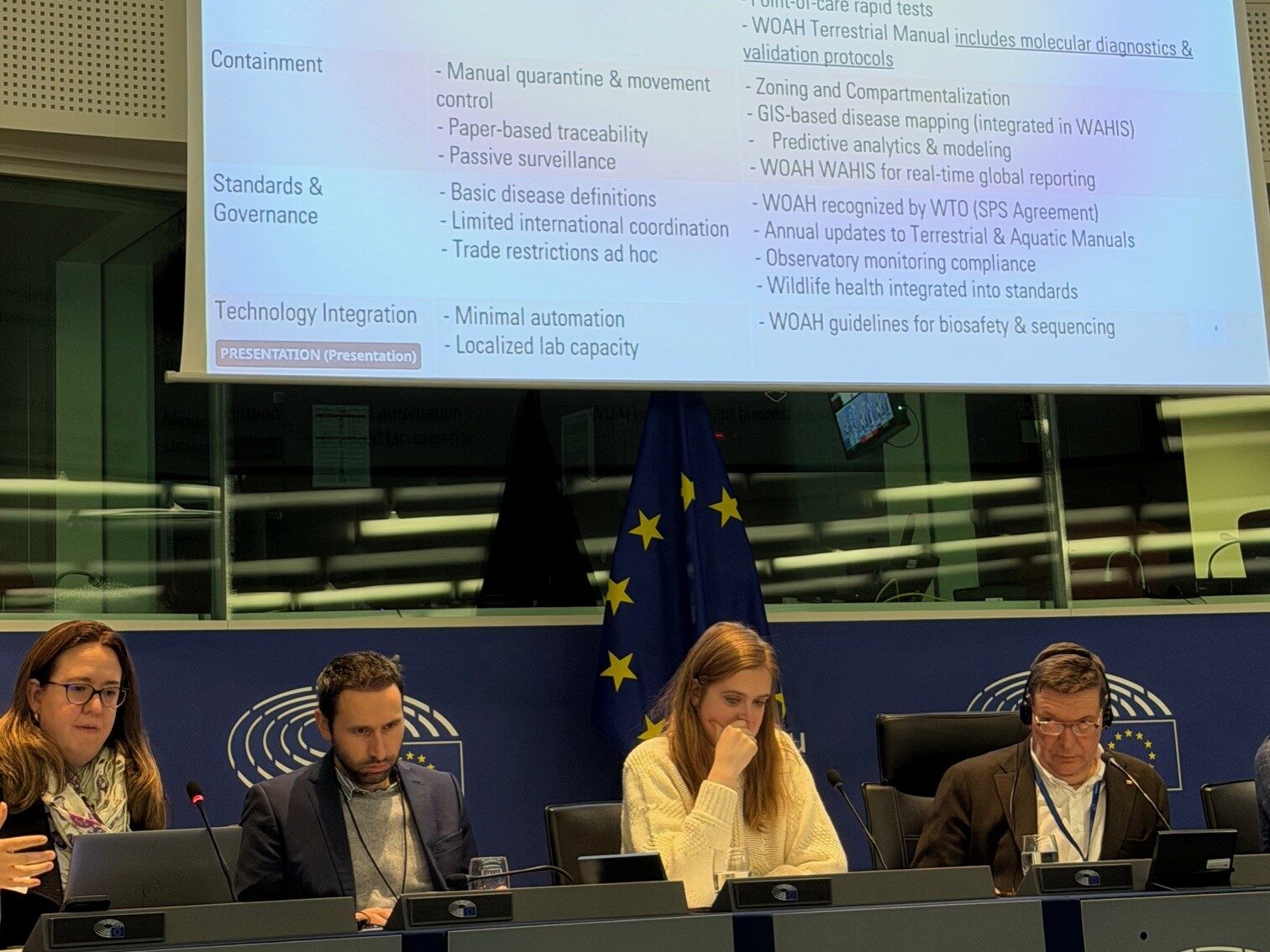
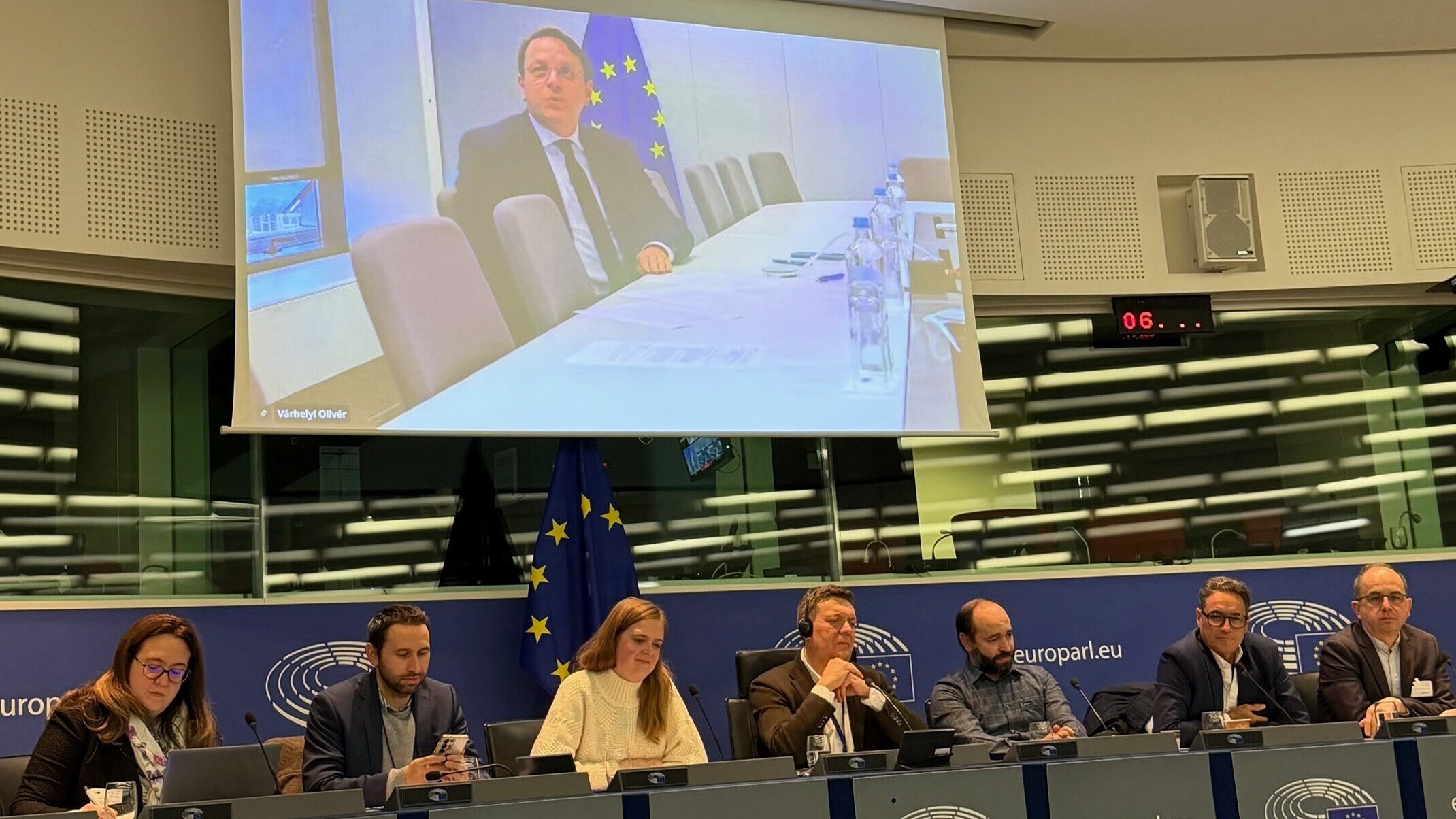
The European Commissioner for Health and Animal Welfare conclude the event reminding participants that the EU has the highest animal health standards globally. He noted the unprecedented surge in diseases, like HPAI, ASF, PPR, FMD, LSD – all coming at the same time – and recognised that the consequences can be devastating for farmers, for our food supply, and even the economy. He agreed the discussion was very timely and that all these disease outbreaks should trigger a proper reflection on the EU strategy.
Download the presentations here:
How do the requirements of the EU Deforestation Regulation (EUDR) impact the competitiveness of the EU livestock sector? The EUDR
Momentum for progressive investment in more sustainable farming systems has slowed down or even stopped due to over restrictive and burdensome
Our co-chair MEP Maria Grapini, opened the morning’s discussion by stressing that sustainable livestock and its by-products represent an important