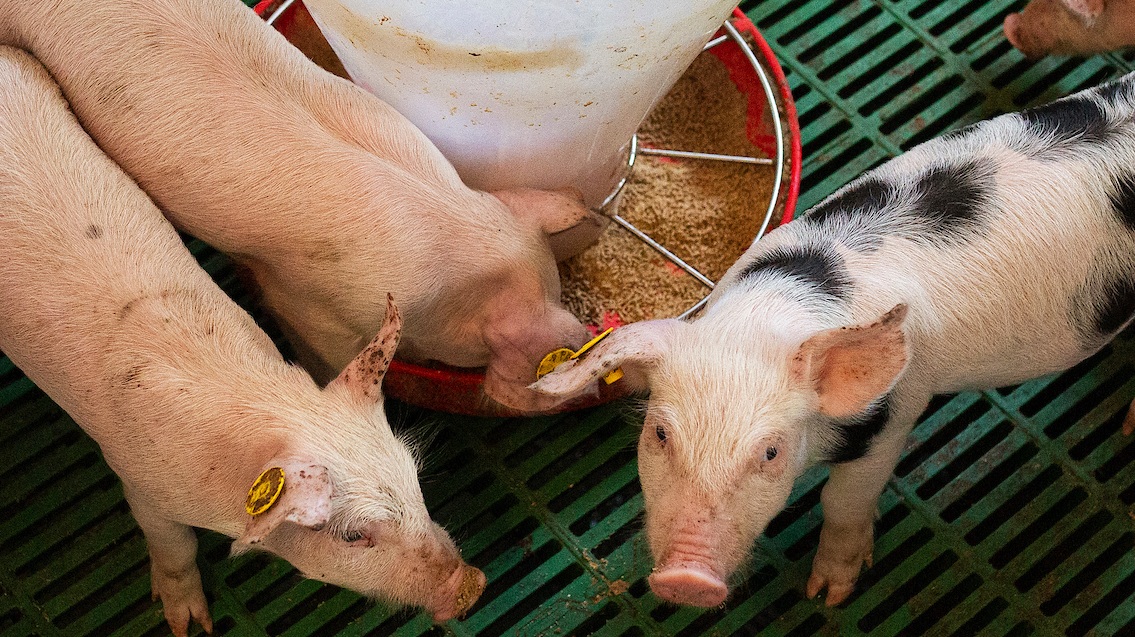
The upcoming EU Livestock Strategy highlights the need for livestock farming to contribute its fair share to the decarbonisation of the EU economy. Previously, the Sustainable Livestock Intergroup addressed the ambitions of reducing direct on-farm emissions, such as methane from enteric fermentation in cattle. For monogastrics like pigs and poultry, the production and sourcing of animal feed are the key determinants of the overall carbon footprint of livestock systems, and therefore the key focus to drive decarbonisation.
Improvements in data development on feed ingredients is a key essential first step to reliably assess where the pressure points lie, to subsequently enable innovation in animal feed formulation for carbon footprint reduction purposes. An increased use of circular feed ingredients is a key strategy in this regard, as it makes use of resources which are not cultivated with a dedicated purpose of being used as animal feed.
This Intergroup session will provide insights into these issues and showcase the main drivers and practical examples for reducing carbon emissions in livestock farming through more sustainable animal feed formulation.
Programme
📅 30th APRIL | 🕑 10:00–11:30 PM | 📍 Room Winston Churchill 100
Welcome
I. How can circular feed and feed additives be deployed to reduce emissions in monogastric livestock farming?
II. Exchange of views with invited speakers
III. Exchange of views with MEPs
Conclusion
The upcoming EU Livestock Strategy highlights the need for livestock farming to contribute its fair share to the decarbonisation of
Our Chair MEP Benoit Cassart opened the February meeting of the Sustainable Livestock Intergroup saying that we can’t talk about
Livestock farming is essential for feeding Europe and maintaining food autonomy — a point highlighted by Loïg Chesnais-Girard, President of